
We Work With 170+ Enterprise Clients Across Licensing, Cloud and IT Service Management

Your OpenAI Partner for Licenses, Use Cases and Team Training

Holograph is an OpenAI partner, with OpenAI-certified specialists on our team. We help you use ChatGPT Enterprise where it pays off and measures what each use case returns. The goal is more output from the people you already have.

Use Cases Picked on Return

Before anything is built, we score each AI idea on the data behind it and the return it can show. Only the ideas that hold up go ahead.

Company Data Stays in Your Workspace

We license ChatGPT Enterprise and set it up for your organization, so prompts and files stay in a workspace your admins control.

Every Team Trained on Its Own Tasks

We run hands-on training for each team that adopts a use case, built around the work that team does every week.

Token Spend Under Control

Our AI FinOps service shows token use by team and routes each task to the least expensive model that does it well.

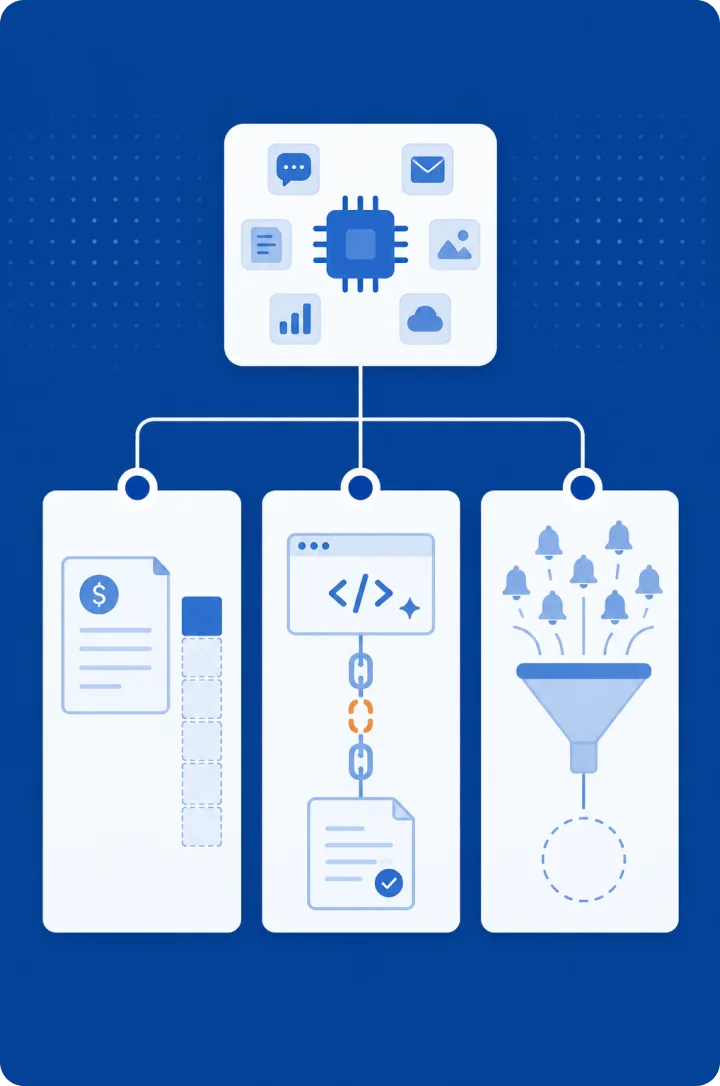
Three Questions AI Makes Hard to Answer

Once AI tools are in daily use, the questions finance, auditors and on-call engineers ask get harder to answer. These are the situations that bring them up.
how it works

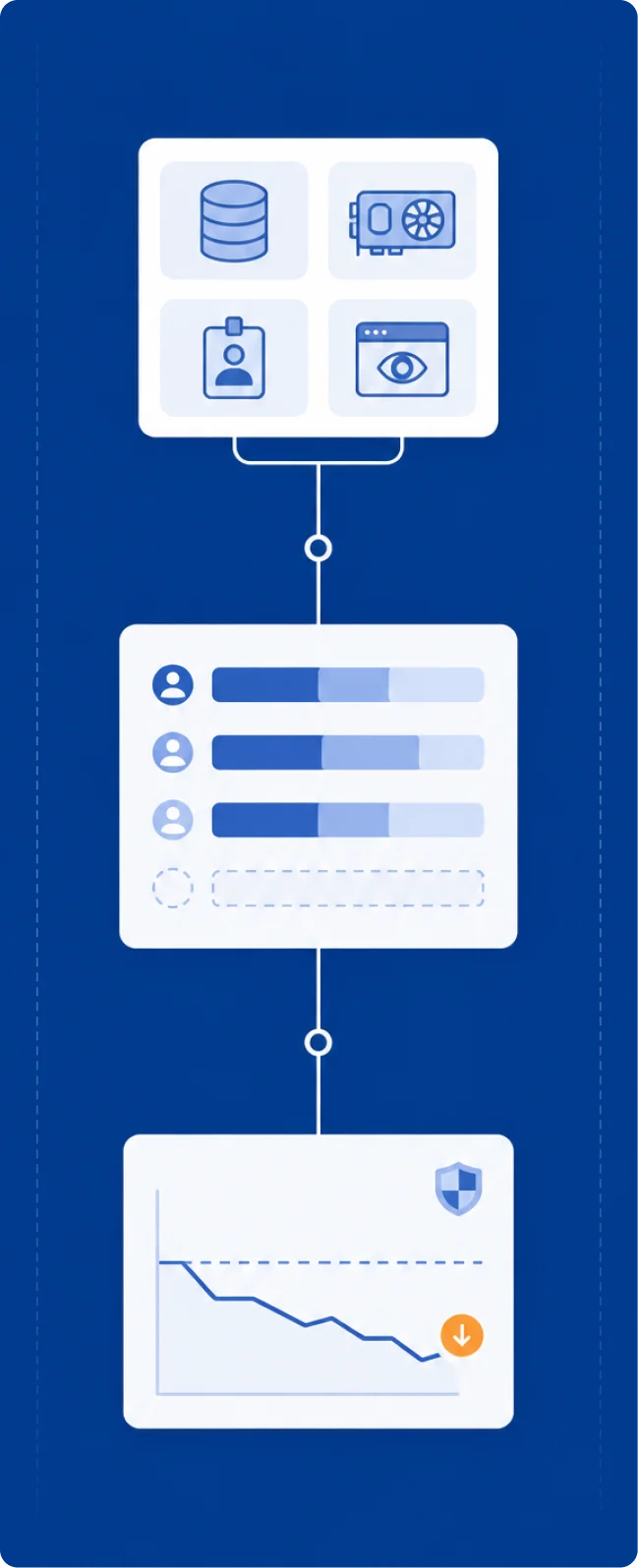
An AI Bill Nobody Can Break Down

Your OpenAI or Amazon Bedrock invoice rose this quarter, and finance wants to know which team, model or product drove it. Copilot and ChatGPT seats renew separately, and unapproved tools sit on expense claims.

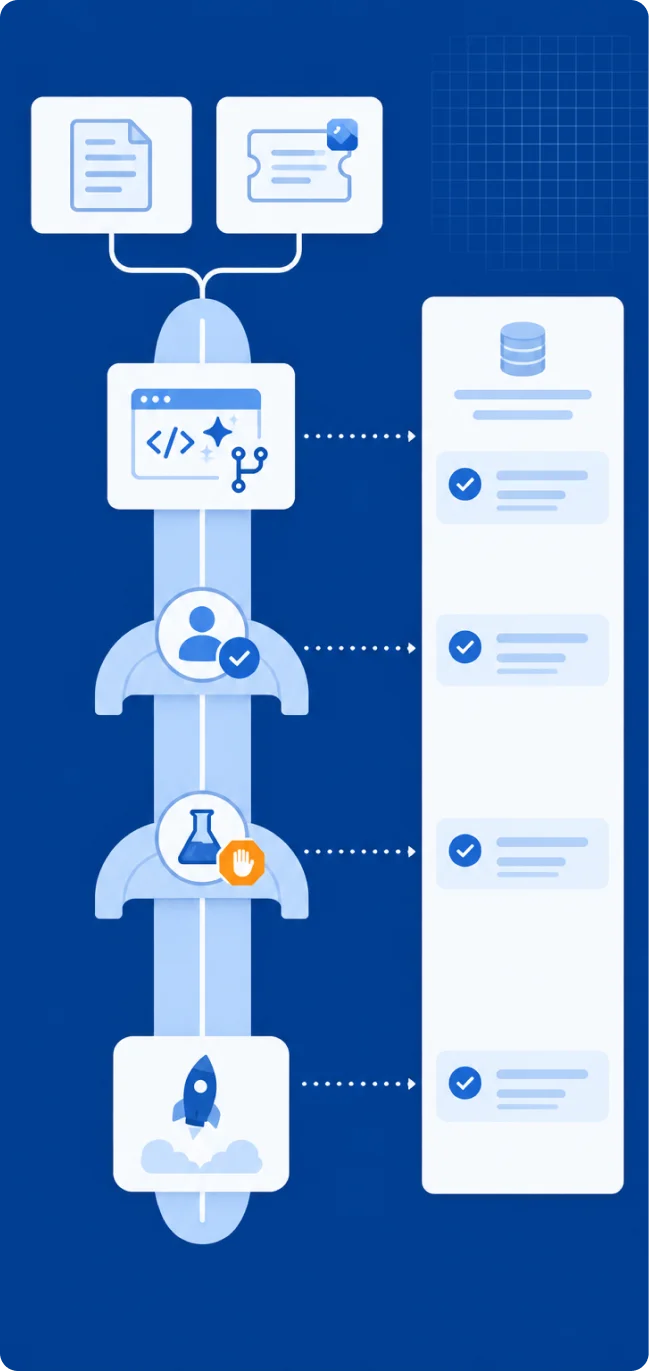
An Auditor Asks About AI-Written Code

The auditor wants to know which changes in the last release were AI-written, which requirement each one met and who reviewed it. Your pull requests hold none of that.

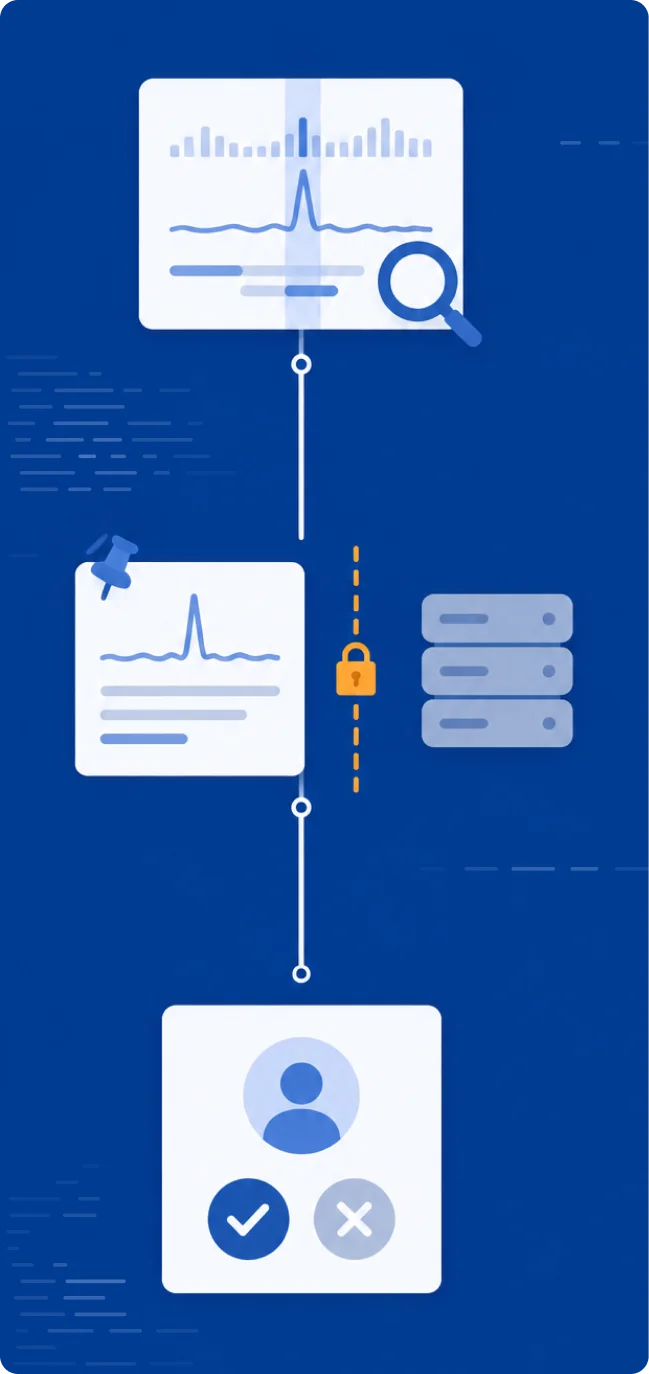
An Incident With Dozens of Alerts and No Clear Cause

One failure set off alerts across several monitoring tools, and the on-call engineer spent the first hour finding the one that mattered. The post-incident review was written from memory a week later.

What a Successful AI Pilot Leaves Open

A pilot shows that a model or assistant can do the job. Three decisions are still open when it ends: who pays for it at scale, which systems it may touch and what record it leaves.

Governance work has no clear owner and shows nothing in a sprint review. It also competes for budget with the next use case, so it gets pushed back.
Holograph Pattern

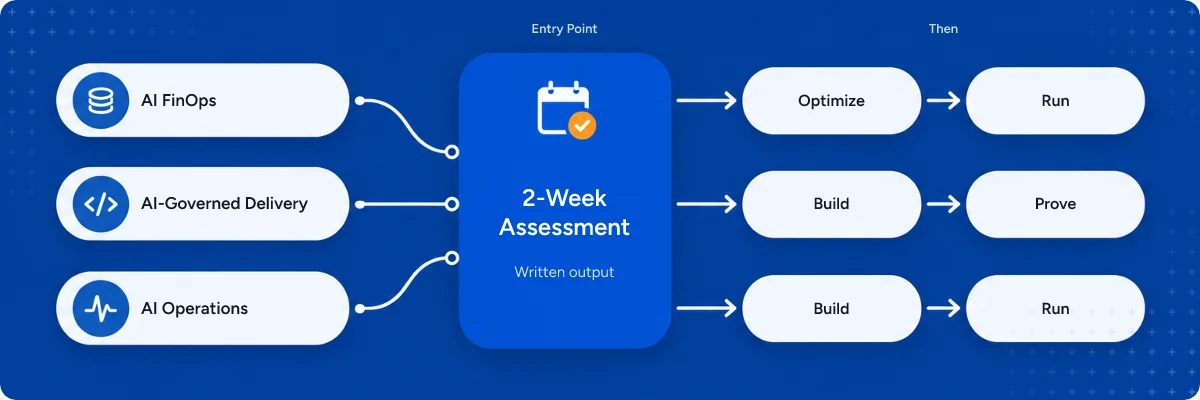
Three Service Lines, One Entry Point

Each line starts with a two-week assessment with a fixed scope and ends in a written report that stays with you. You decide what comes next based on that report. The work is for CIOs, CTOs and finance leaders, and for the engineering and operations teams that run AI day to day.
Service line What it covers Assessment Written output
AI FinOps Spend on AI APIs, GPUs and seats AI Spend Assessment A one-page cost picture for finance and a ranked savings backlog
AI-Governed Delivery AI coding assistants and agents in your SDLC AI Delivery Readiness Assessment A gap report and a prioritized roadmap
AI Operations AI-assisted incident analysis AIOps Readiness Assessment A readiness report and prioritized use cases

Services

Control AI Spend Across APIs, GPUs, Seats and Shadow AI

We inventory what you spend on AI, find what is paid for and unused, and put controls in place before the next renewal.
AI Spend Assessment
Assess
We inventory token usage, GPU hours, seats and API keys across your providers, and baseline the cost by team and use case. Output: a one-page cost picture for finance and a ranked savings backlog.
Shadow AI Discovery
Assess
We find AI tools in use without approval through single sign-on (SSO) records, expense data and network logs. Output: a register of unsanctioned tools and the policy actions available.
Seat and License Rightsizing
Optimize
We reclaim idle Copilot, ChatGPT and Claude seats and move each team to the plan tier it uses, ahead of the renewal date. Output: a reclaim plan and a renewal forecast.
Token and Model Optimization
Optimize
We route each request to the least expensive model that meets its quality bar, and add response caching and prompt trimming. Output: a routing policy and a working gateway.
GPU and Inference Cost Control
Optimize
We rightsize GPU instances, schedule batch inference off-peak and move interruptible jobs to spot capacity. Output: a utilization dashboard and a savings plan.
Showback and Budget Guardrails
Run
We attribute AI cost to each team and each agent, then set quotas, anomaly alerts and enforced spend caps. Output: showback reports and live alerts.
Managed AI FinOps
Run
Each month we review spend against the baseline, work through the optimization backlog and update the forecast. Output: a monthly report and forecast.
Spend visibility and controls run on CostRoom, a technology spend management platform we partner with.

Governed AI Code Delivery

We set up your repositories and CI pipelines so every AI-written change carries a record. It shows which requirement the change came from, which standards it passed, who approved it and what it cost.
AI Delivery Readiness Assessment
Assess
We review your repositories, pipelines, Jira and Confluence hygiene, and how your teams use AI coding tools today. Output: a gap report and a prioritized roadmap.
Harness-Based SDLC Setup
Build
We wire agents, skills, hooks and guardrails into your repositories and CI pipeline, so developers and coding agents reach merge through one governed path. That set of controls, committed with your code, is the harness. Output: a working harness in a pilot repository.
Standards as Code
Build
We turn your coding, security and architecture standards into automated checks that every AI-written change must pass before it merges. Output: a rule pack committed to your repository.
Engineering Knowledge Graph
Build
We link your code, Jira tickets, Confluence pages and incident history into a knowledge graph that coding agents query before they write or answer. Output: a context API your agents call.
Requirement-to-Release Traceability
Build
We link each requirement to its ticket, its AI-authored pull request and its release, and keep the chain as an audit trail. Output: an audit export for your compliance team.
Quality and Budget Gates
Build
We add automated review and test gates that can block a merge, and set token budgets per team and per sprint. Output: gates live in your CI pipeline.
Governed Pilot Squad
Prove
One squad works through the harness on real backlog items while we measure cycle time and quality against the baseline. Output: a before-and-after report from your own delivery.

Read-Only AI for Incident Analysis

During an incident, our AI agents read your logs, metrics, traces and change history, then propose a likely cause with the evidence attached. They have no write access to production, and your on-call engineer decides what happens next.
AIOps Readiness Assessment
Assess
We review your monitoring, logging, tracing and incident history to see what an agent would have to work with. Output: a readiness report and prioritized use cases.
Observability Data Foundation
Build
We connect logs, metrics, traces and change events so the agent works from complete evidence. Output: a unified telemetry layer.
AI Root Cause Analysis
Build
We deploy a read-only agent that correlates alerts, recent changes and logs, and proposes a cause with the supporting evidence. Output: an RCA agent running in your environment.
Alert Noise Reduction
Build
We group, deduplicate and rank alerts so your on-call engineers see the ones that need action first. Output: a tuned alert pipeline.
Incident Runbook Automation
Build
We turn your runbooks into guided steps, each with an approval gate and an audit record. Output: a runbook library.
Post-Incident Review Automation
Run
We draft incident timelines and review documents from the incident record while the details are still accurate. Output: review templates and first drafts.
Managed AI Operations
Run
Each month we tune the agent and the alert rules, review recent incidents and report on time to resolution. Output: a monthly report.

Pilot Scope and Measurement

After the assessment, we run a pilot on your own systems. Before it starts, we agree on the scope, the measures and what counts as a result.
how it works
01

Scope Is One Workstream

We pick one squad, one area of AI spend or one incident workflow. It is small enough to finish in the agreed window and typical enough for the result to apply elsewhere.
02

Measures Are Set at the Assessment

The assessment records the baseline figures, such as AI cost per team, cycle time or time to resolution. We take the same measures at the end of the pilot.
03

The Outcome Is a Written Comparison

You get a before-and-after report from your own environment. It gives you the figures to decide whether to expand, adjust or stop the rollout.

Controls on Every Engagement

We put these controls in place on every engagement. Each one leaves a record you can show your auditors or your security team.

Standards Enforced in the Pipeline

AI-written changes must pass your coding, security and architecture checks before they merge.

Every Step Linked

Requirement, ticket, pull request, review, test and release are linked in one chain.

Agents Read, People Decide

Operational agents have read-only access. Any change to a running system needs a person's approval at a runbook gate.

Spend Has Limits

Token budgets, quotas and spend caps apply per team and per sprint, with anomaly alerts on top.

Frequently Asked Questions

What does Holograph's two-week assessment cover?
Each service line has its own assessment with a fixed scope. AI FinOps inventories tokens, GPU hours, seats and APIs. AI-Governed Delivery reviews your repositories, pipelines and AI coding tool use. AI Operations reviews monitoring, logging, tracing and incident history. Each one ends in a written report.
Do Holograph's AI agents have write access to our systems?
No. Operational agents read alerts, changes and logs, propose a cause and show the evidence. Any change to a running system goes through a runbook step that a person approves. Our delivery agents write code only inside your pipeline, where review, test and budget gates can block a merge.
Where do our data and code stay?
They stay in your environment. Agents work against your systems from inside your estate, and the knowledge graph, traceability records and audit trails stay with your code and incident data. We confirm deployment details against your security and data requirements during the assessment, before anything is connected.
We already use Copilot. What does this add?
We manage the cost and the controls around it. We find seats that are paid for and unused, and route requests to the least expensive model that does the job. We also check AI-written code against your standards before it merges and link each change to its requirement.
How do you keep AI spend in check during the engagement?
We set up showback, quotas and spend caps early. Showback attributes cost to each team and agent, and caps stop one workload from using a quarter's budget. Anomaly alerts flag unusual spend before the invoice arrives.
How is the result measured?
The assessment sets the baseline, and we repeat the same measures at the end. In delivery, a pilot squad works through the harness while we measure cycle time and quality. You get a before-and-after report from your own delivery.
Which service line should we start with?
Start with AI FinOps if AI spend is growing faster than anyone can explain. Start with AI-Governed Delivery if AI already writes your code and your records cannot show which standards it passed. Start with AI Operations if alert volume is high and incidents take too long to explain.
Holograph pattern

Start With a Two-Week Assessment

Tell us which AI tools you run, where the spend or the risk sits,
and the deadline you are working to.