Enterprise DevOps Services for Faster, More Reliable Software Delivery
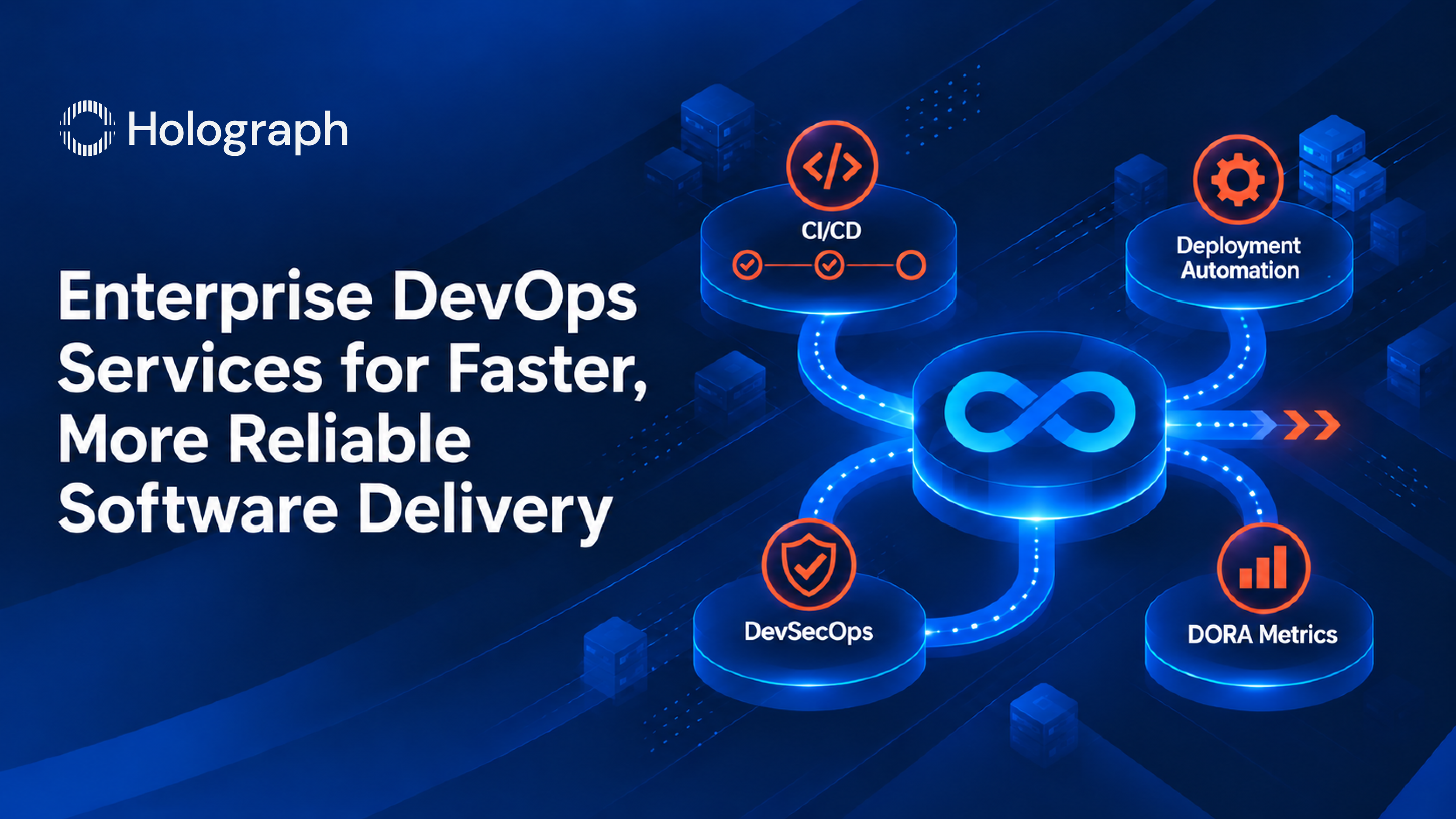
Most enterprises already own the tools that modern software delivery runs on. They license a Git platform, stand up cloud environments, and buy the CI and container tooling their engineers asked for. The delivery still crawls. Releases take a weekend, deployments are manual and nervous, and the same defect classes keep reaching production. The gap is not the tools. It is the way they are configured, automated, and measured.
This is Performance work, the second of our three pillars: getting more from what you already bought. A DevOps engagement does not add a new platform. It takes the Git, CI, and cloud tooling already in the estate and turns it into a governed pipeline where code moves from commit to production quickly, safely, and with a record of what happened. Here is what that covers, what it changes, and how we measure whether it worked.
What software delivery performance actually means
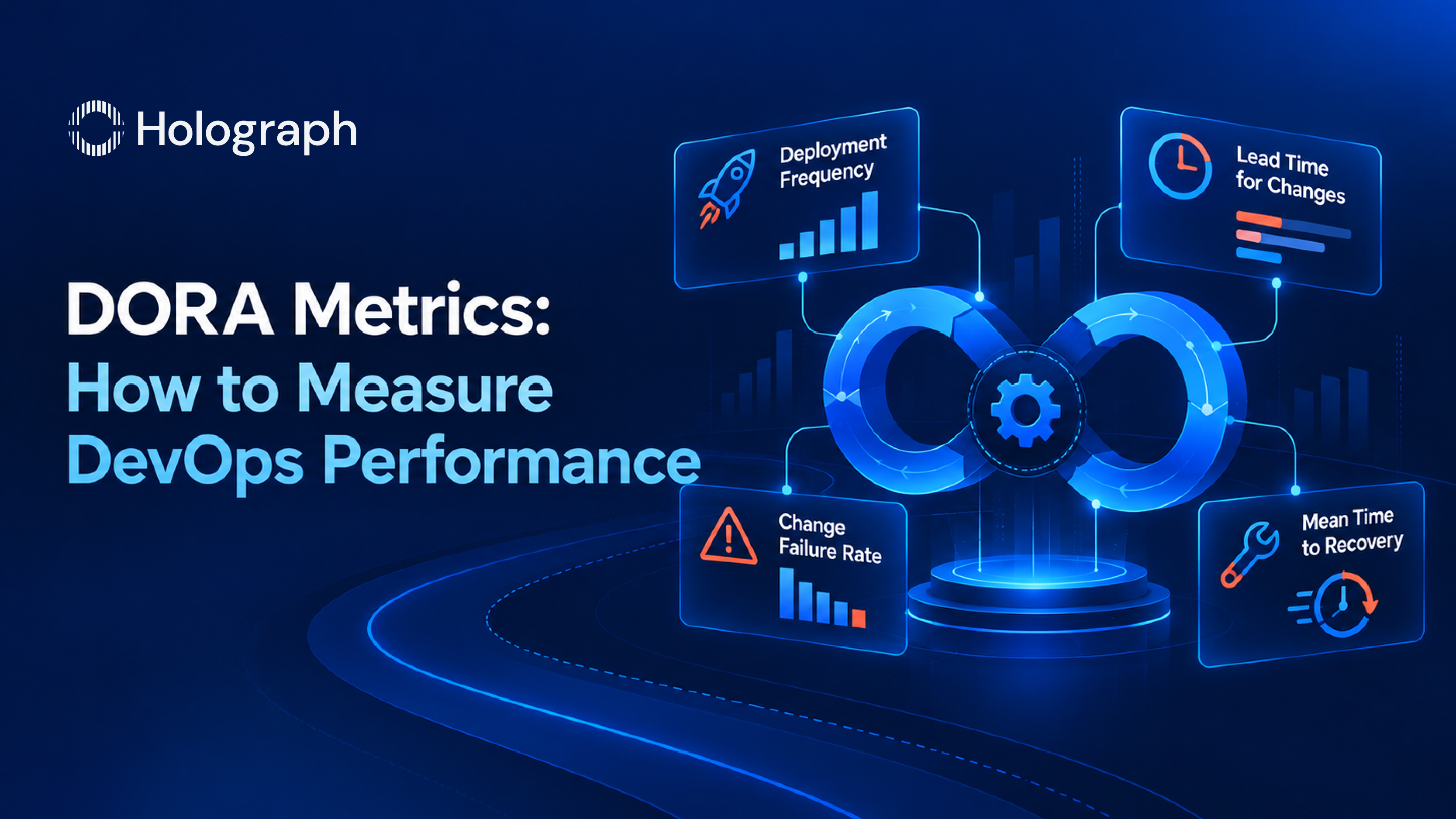
Delivery performance is measurable, and the industry-standard measure is the set of four DORA metrics. Deployment frequency: how often you ship. Lead time for changes: how long it takes a commit to reach production. Change failure rate: what share of deployments cause an incident. Mean time to recovery: how fast you restore service when one does. These four predict both engineering throughput and reliability, which is why every credible DevOps program baselines them before it changes anything and tracks them afterward.
The reason to start here is discipline. Without a baseline, "faster delivery" is an opinion. With one, every pipeline change, every automation, and every security gate is judged against whether it moved deployment frequency up and change failure rate down. We set the baseline first, so the work is accountable to numbers rather than to a sense that things feel smoother. A team that deploys once a fortnight with a one-in-three failure rate has a very different problem from one that deploys daily but takes hours to recover, and the baseline is what tells the two apart before any work begins.
Where enterprise delivery slows down
The pattern repeats across large estates. Builds and deployments are still run by hand, so a release consumes an engineer for hours and can only happen when that person is available. Testing and security checks sit at the end, after the code is written, so defects and vulnerabilities are found late and cost the most to fix. Environments drift, because each one was configured by hand rather than from a definition, so a change that worked in staging fails in production. And nobody can say how the team is performing, because deployment frequency and failure rate are not being measured.
The cost of this is not only engineering time. Slow, manual delivery holds every feature and fix behind it, so the business waits on releases it has already paid to build, and each nervous deployment carries the risk of an outage that manual steps make more likely. Engineers feel it as long weekends and firefighting. The organization feels it as slower time to market and reliability that depends on who happens to be on call.
None of that is a tooling deficiency. The platforms are capable of automated pipelines, staged deployments, and policy gates. They were bought and never configured to do it. Performance work closes that distance.
What our DevOps services cover
The engagement is scoped to the estate, but four capabilities carry most of the outcome.
CI/CD pipeline implementation
We design and build the pipeline that takes code from commit to production without manual steps: branching strategy, automated build, automated testing, artifact management, and staged deployment. As a GitLab Solution Partner we implement this natively in GitLab CI/CD, and we work across the container tooling that surrounds it, including Docker and Kubernetes. The result is that a release stops being an event that consumes a person for a day and becomes a routine, repeatable process the pipeline runs. Standardizing the pipeline across repositories also removes the variation that makes one team's release reliable and another's fragile, so delivery quality stops depending on which engineer happened to set it up.
Deployment automation and release safety
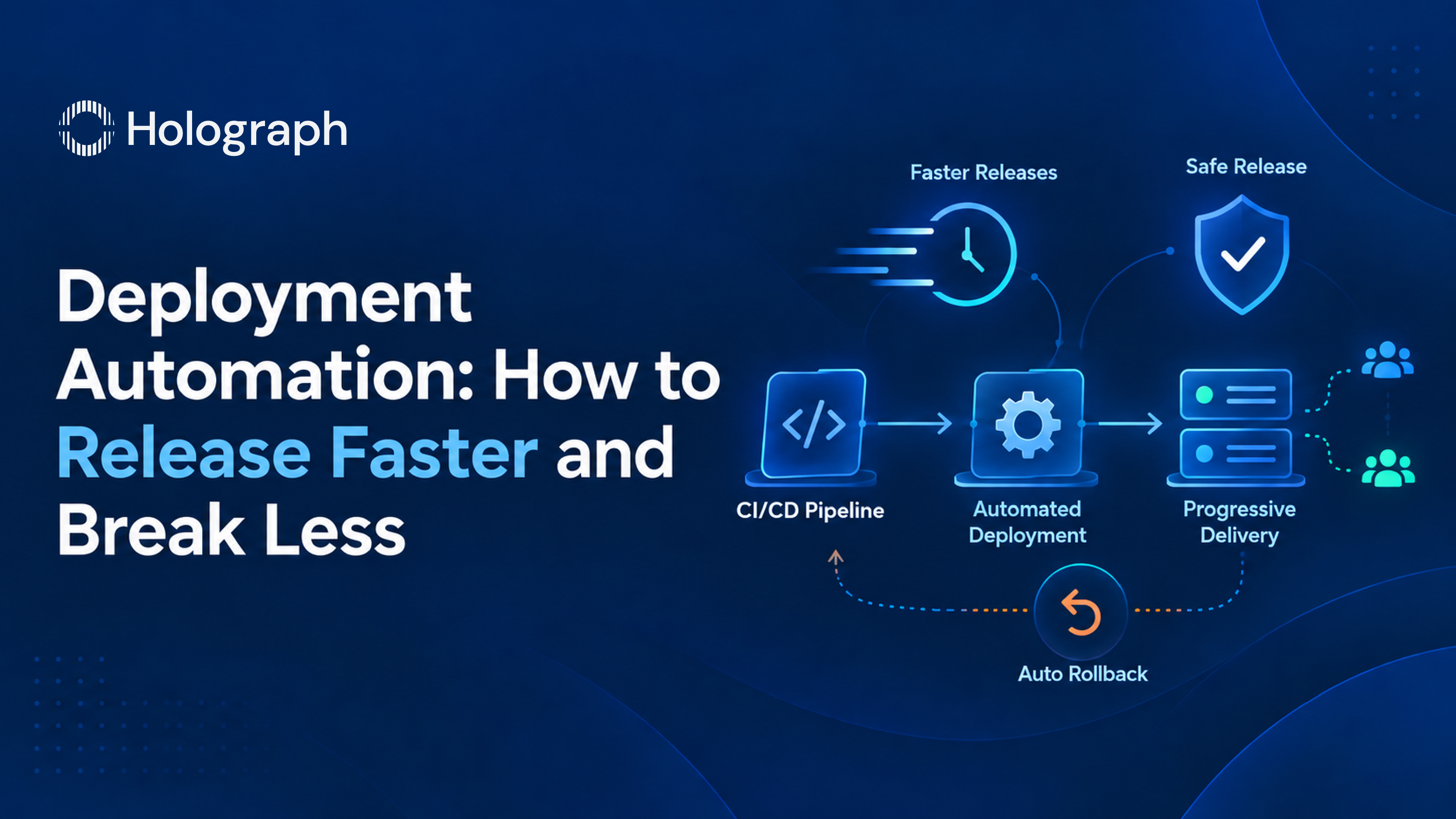
Speed without safety is just faster failure, so deployment automation is paired with the controls that make frequent releases low-risk: staged rollout, automated rollback on failure, and the approval and audit steps that regulated industries require. Automating the deployment removes the manual effort and the human error that comes with it, and the release-safety controls mean shipping more often does not mean breaking more often. This is the capability that turns a multi-hour manual deployment into one that runs in minutes. For regulated estates the same automation produces the approval record and audit trail compliance requires, so releasing faster and staying auditable stop being in tension.
DevSecOps: security inside the pipeline
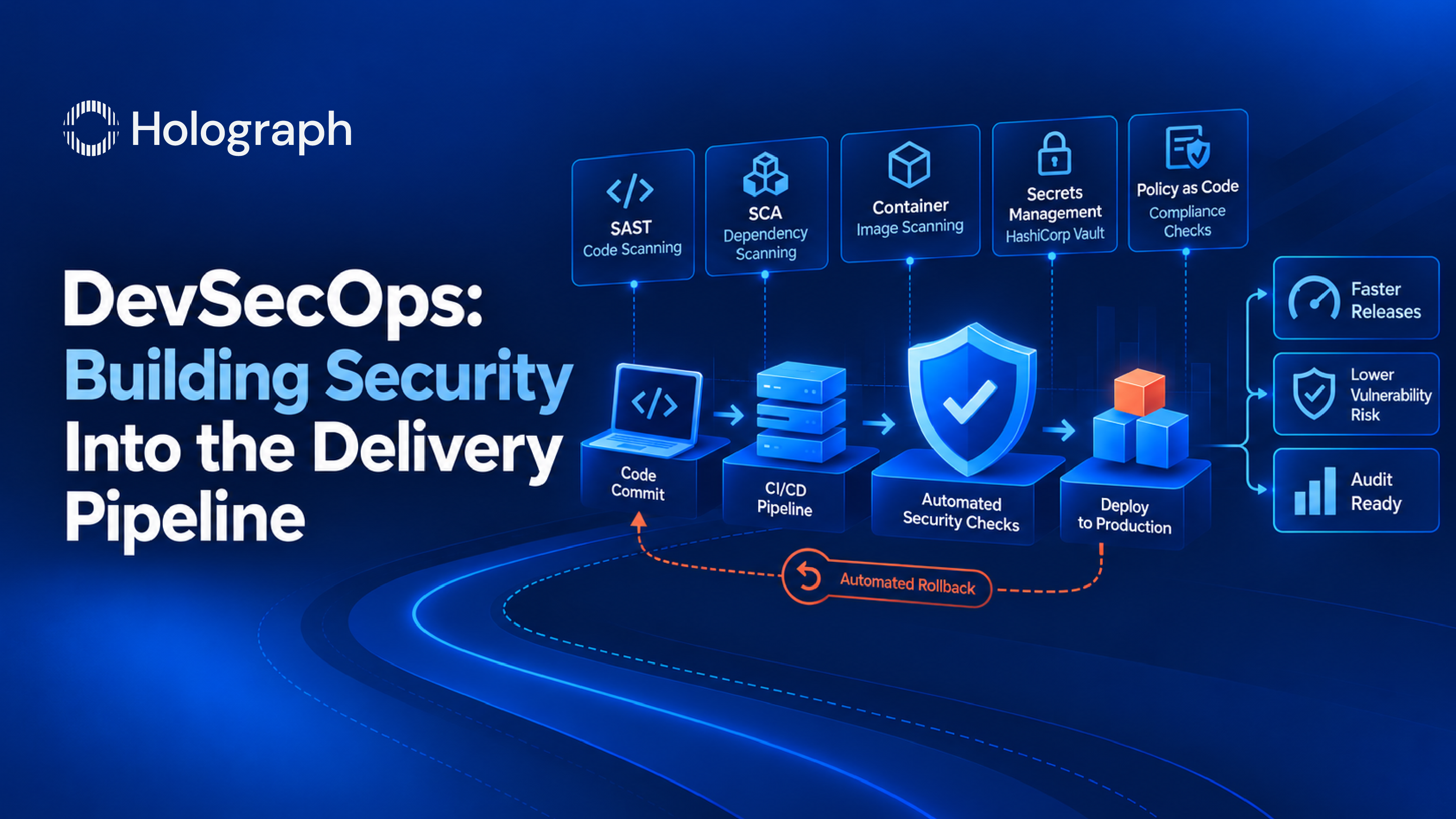
Security belongs in the pipeline, not in a review after the code is written. We embed static analysis, dependency and container scanning, and secrets management as automated gates that run on every change, so a vulnerability is caught at commit time where it is cheapest to fix. We implement static analysis through tooling including Semgrep, our security partner for this work, and SonarQube, and we manage secrets with HashiCorp Vault. Security findings reach the engineer in the pull request rather than in an audit months later.
Measuring delivery with DORA metrics
The same four metrics that set the baseline become the operating dashboard. We instrument deployment frequency, lead time, change failure rate, and recovery time so engineering leaders can see delivery performance the way they see any other operational number, and so each subsequent improvement is measured rather than assumed. This is also what makes the work defensible to a CFO: the spend is tied to a metric that moved.
The platforms we work in
We build inside the estate you already run rather than moving you onto a preferred stack. Pipelines are implemented natively in GitLab CI/CD, with Docker for containerization and Kubernetes for orchestration where the workload calls for it. Security gates use Semgrep and SonarQube for code analysis and HashiCorp Vault for secrets, and delivery and reliability are instrumented with Prometheus. Where an estate runs different tools, the same practices apply to them. The discipline is portable, and the specific tools are chosen to fit what you already have, so the work builds on your existing investment rather than replacing it.
Proof: what this looks like in delivery
For a New Delhi engineering firm, Solarman Engineering Projects, we rebuilt the delivery pipeline on GitLab, Docker, Kubernetes, HashiCorp Vault, and Prometheus. Deployment time dropped from six to eight hours to under 30 minutes, a 90% reduction, and release frequency increased threefold. The change failure rate held below 5%, uptime reached 99.9%, and manual deployment effort fell by 75%, which returned an estimated 120 to 150 engineering hours a month to the team. Incident detection became 60% faster and troubleshooting 70% more efficient, because the pipeline and its observability made failures visible instead of hidden. The tools were largely ones the team already had. What changed was how they were configured, automated, and measured.
The approach extends to legacy estates as well. For TechMah CMF, a medical devices technology company, we automated the build and deployment of legacy C and C++ applications using TeamCity, JIRA, and SonarQube, bringing modern pipeline discipline to code that predates it. The scope was the internal delivery tooling, and the point holds: DevOps performance is available to legacy systems, not only to cloud-native ones.
How an engagement works
The sequence starts with evidence and stays incremental.
First, we assess and baseline: an audit of the current pipeline, a value-stream view of where time is lost, and a DORA baseline so there is a number to improve against. Second, we design the roadmap: pipeline architecture, tooling decisions, and the security gates, prioritized so the highest-impact fixes come first. Third, we implement on a pilot service and prove it with a real deployment before rolling out further, so the team adopts new workflows without a big-bang cutover that risks continuity. Fourth, we scale across the portfolio and hand over, maturing the automation and the DevSecOps policy while the engineering team takes ownership.
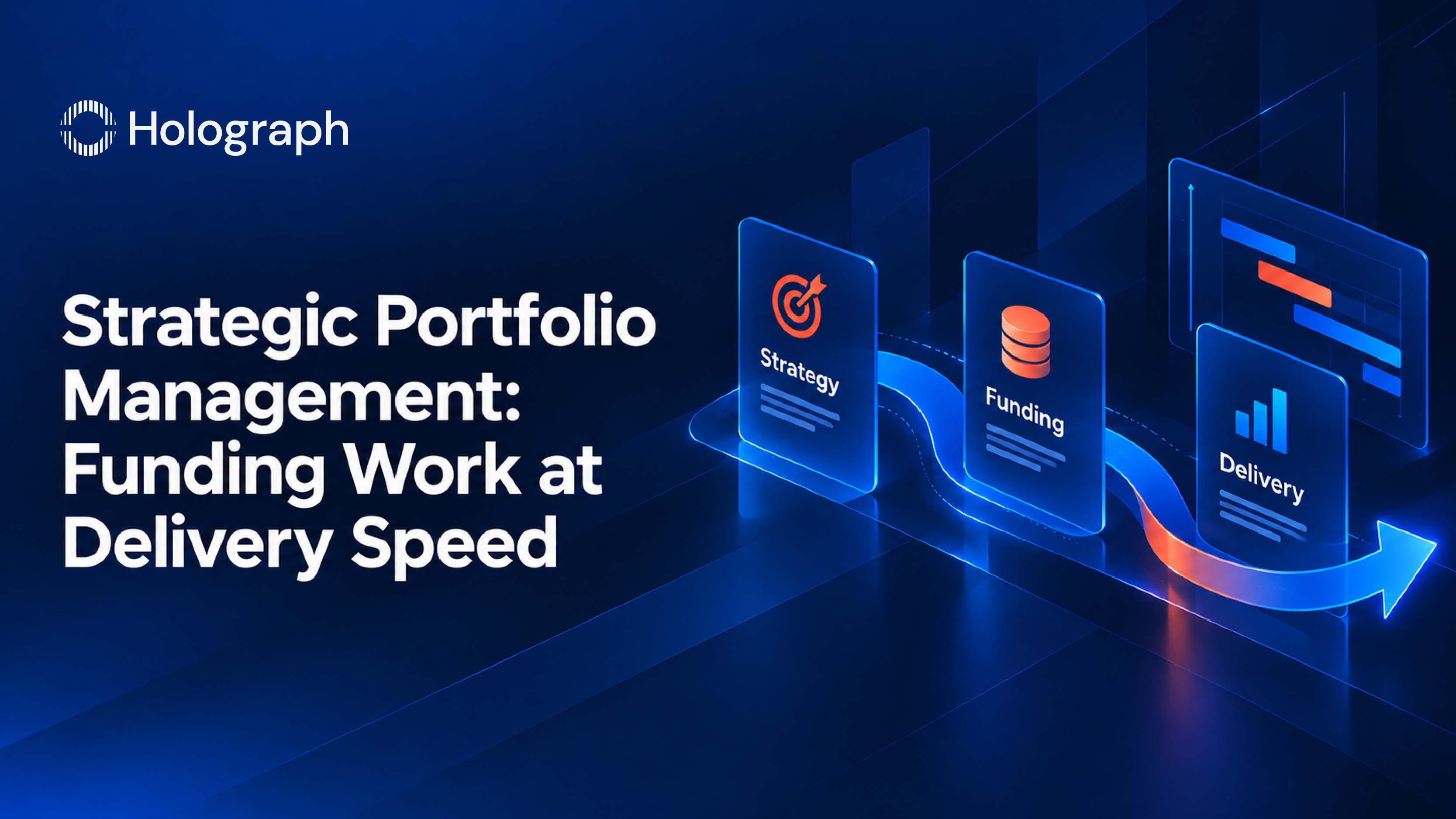
Because this is Performance work, it connects to the pillar before it. The savings a licensing audit generates under Optimisation can fund the implementation and adoption work here, so the delivery improvement is paid for by cost already recovered rather than by new budget. And where a team needs certified engineers to run the new pipeline without a permanent hire, that is Productivity work, delivered as staff augmentation sized to the need. The three pillars are designed to fund and reinforce one another, so a delivery improvement rarely has to be justified as a standalone cost.
Get started with a DevOps engagement
If your platforms are in place but delivery is still slow, manual, and hard to measure, that is exactly the gap a DevOps engagement closes. We start every engagement with an assessment that baselines your delivery against the four DORA metrics and returns the highest-impact moves to improve them. Reach out to talk through where your delivery is today and where it needs to be.
Frequently asked questions
What are DevOps services?
DevOps services design, automate, and mature the way an organization delivers software, covering CI/CD pipelines, deployment automation, security in the pipeline (DevSecOps), and measurement against delivery metrics. The goal is to move code from commit to production faster and more reliably using the platforms an organization already owns, rather than adding new ones.
What are the four DORA metrics?
Deployment frequency (how often you ship), lead time for changes (how long a commit takes to reach production), change failure rate (the share of deployments that cause an incident), and mean time to recovery (how quickly service is restored). Together they measure both the speed and the reliability of software delivery, and they are the standard baseline for a DevOps engagement.
What is DevSecOps?
DevSecOps embeds security into the delivery pipeline instead of treating it as a separate phase after development. Static analysis, dependency and container scanning, and secrets management run automatically on every change, so vulnerabilities are caught at commit time where they are cheapest to fix, without slowing delivery down.
How long does a DevOps engagement take?
A focused improvement, such as an automated CI/CD pipeline for one service, can show results in a few weeks. A broader program across multiple teams, covering deployment automation, DevSecOps, and measurement, runs longer and is delivered incrementally, so the first service improves early while the rollout continues across the portfolio.
Does DevOps only apply to cloud-native software?
No. Deployment automation, pipeline discipline, and security gates apply to legacy systems as well. We have automated the build and deployment of legacy C and C++ applications, and the same delivery performance is available to established estates, not only to cloud-native ones.
Delivery slow despite the tools you already own?